EU-Mercosur Agreement Opens a Window of Opportunities for European Companies to Set Up in Brazil
The EU-Mercosur deal signed in January 2026 cuts barriers, opening Brazil as a target for European firms.
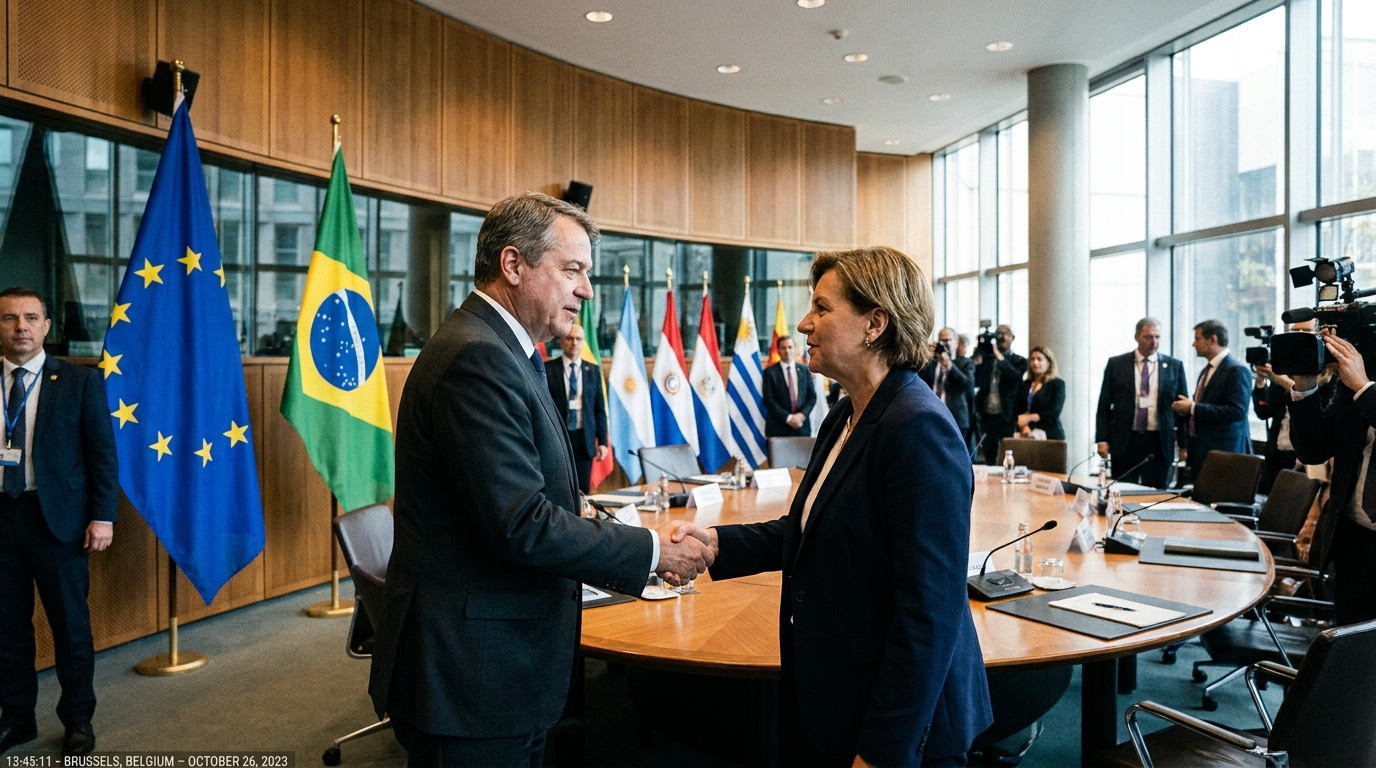
The signing of the Partnership Agreement between the European Union and Mercosur, in January 2026, has redrawn the map of opportunities for investors and entrepreneurs across the European bloc. With the reduction of tariff and regulatory barriers, countries such as France, Germany, Italy, Belgium, Spain and Portugal are now looking at Brazil — the largest economy in Mercosur — as a strategic destination to open new operations and expand their businesses internationally.
A Historic Agreement After Two Decades of Negotiation
The official signing took place on January 17, 2026, when the European Union and the four Mercosur countries — Argentina, Brazil, Paraguay and Uruguay — signed two parallel legal instruments: the EU-Mercosur Partnership Agreement (EMPA) and the Interim Trade Agreement (iTA). The iTA takes effect before the full ratification of the EMPA, ensuring the immediate application of a substantial portion of the commercial commitments.
The road to the signing was marked by important milestones: the preliminary political agreement reached on December 6, 2024; the European Commission’s proposal to the Council on September 3, 2025; and the final authorization from the Council of the European Union on January 9, 2026.
A Relationship That Already Moves Billions
Even before the new agreement, the figures of the EU-Mercosur relationship were already impressive. According to the European Commission, the European Union is the second-largest trading partner of Mercosur in goods, with exports of € 57 billion in 2024. In the services sector, the bloc accounts for roughly one quarter of Mercosur’s external trade, with € 29 billion exported in 2023.

The EU is also the largest foreign investor in Mercosur, holding an investment stock of € 390 billion in 2023. With the entry into force of the agreement, this flow is expected to accelerate — particularly due to greater legal predictability and reduced operating costs.
What Changes in Practice for European Investors
The EMPA is built on three main pillars. The first is the expansion of bilateral trade and investments, through the reduction of tariff and non-tariff barriers, with particular attention to small and medium-sized enterprises — a segment that has historically faced greater difficulties in accessing distant markets.
The second pillar is the creation of more stable and predictable rules, covering intellectual property (including geographical indications), sanitary and food safety standards, competition and good regulatory practices. For European companies, this means a business environment much closer to the standards they are already used to.
The third pillar brings together commitments to sustainable development, environmental protection, the fight against climate change and workers’ rights — values appreciated by European consumers and which should facilitate the integration of production chains on both sides of the Atlantic.
Brazil at the Center of European Interest
Among the Mercosur countries, Brazil is expected to attract most of the new European investments. With a consumer market of more than 210 million people, a diversified economy, a strategic geographical position and well-established productive sectors in areas such as agribusiness, industry, energy, technology, financial services and consumer goods, the country offers a wide range of opportunities for European investors looking to establish a direct presence in South America.
French, Belgian, German, Italian and Iberian companies have been observing the Brazilian market for several years. With the agreement now signed, this movement is expected to intensify, particularly among medium-sized companies that previously considered Brazil too complex a market for an in-house operation.
Local Structuring: The Decisive Step
Setting up in Brazil, however, requires deep technical knowledge of the local legislation — considered one of the most complex in the world in tax, labor and corporate matters. Choosing the right corporate structure, the appropriate tax regime, hiring local staff, compliance with ancillary obligations and adherence to sector-specific regulations are factors that often determine the success of a foreign operation in Brazil.
For this reason, relying on specialized advisory services that understand both the European investor’s reality and the particularities of the Brazilian regulatory environment has proven to be a decisive differentiator in successful operations.
About Expertisa
Expertisa, based in Brazil and founded by French, Belgian and Brazilian entrepreneurs, specializes in opening companies in Brazil, tax consulting and other BPO (Business Process Outsourcing) services, including accounting, tax, payroll and financial outsourcing, as well as auditing, mergers and acquisitions and transition management. With offices in Rio de Janeiro and São Paulo, and as an independent member of GGI — one of the top ten international networks of accounting, consulting and legal services — Expertisa supports European companies and investors who wish to establish themselves in Brazil within the new scenario opened by the EU-Mercosur Agreement.
More information at https://expertisa.com.br/.