Selling on eBay, Poshmark, and Facebook Marketplace: Real Profit Math
Reselling looks simple until fees, shipping and time eat the margin. The platform you pick decides profit.
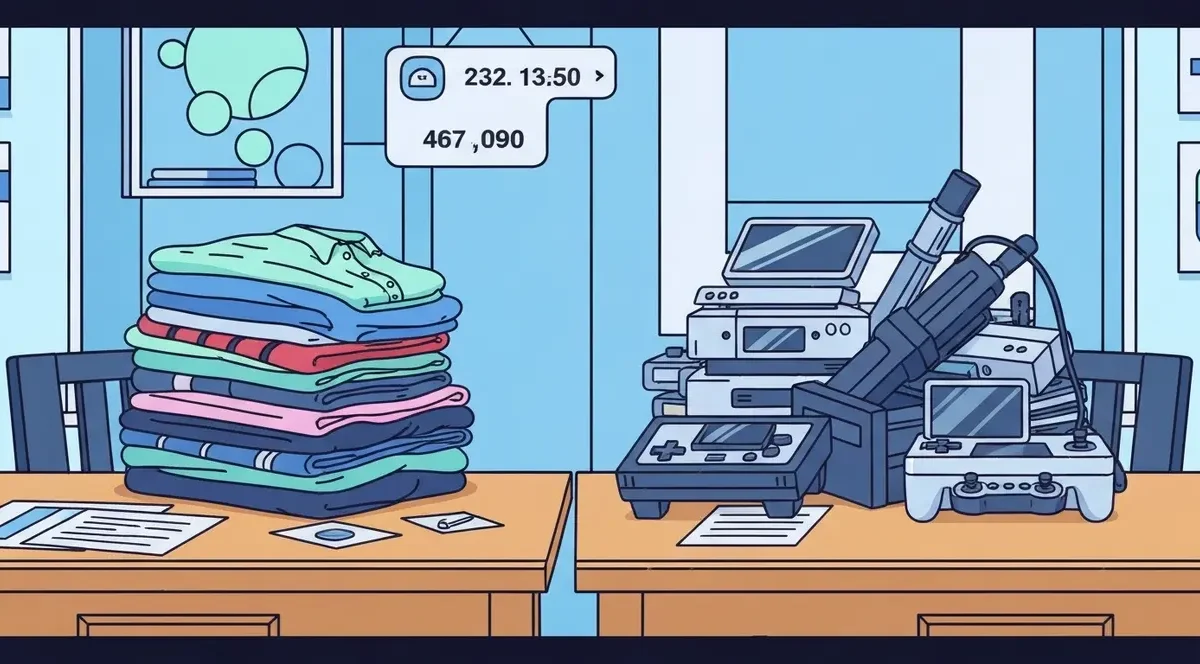
Last spring a friend texted me a photo of two piles on her dining table. One was a stack of designer dresses, the other a heap of old Xbox games and a treadmill. She’d decided this was the year she’d sell on eBay, Poshmark, and Facebook Marketplace and finally clear the house. Six weeks later she sent another text: one of those piles paid for a weekend trip. The other one cost her money. The difference wasn’t the stuff. It was the platform she picked.
Reselling looks simple from the outside: take photo, list item, collect money. The reality is that fees, shipping, and time eat the margin in ways most people never calculate until they’ve already shipped twenty packages at a loss. If you want to actually pocket money from selling on eBay, Poshmark, and Facebook Marketplace, you need to know which category belongs on which platform before you list a single thing.
The myth of “just list it everywhere”
The first myth I want to puncture is the idea that you should cross-list every item to every platform and let the market decide. That approach sounds smart and is actually how new resellers burn out fastest. Each platform has its own fee structure, its own shipping math, and its own buyer expectations. Listing a $40 dress on eBay costs you more in fees and time than listing it on Poshmark, where the audience is already shopping for clothes. Listing a treadmill on eBay means paying to ship 200 pounds of metal across the country when Facebook Marketplace would sell it locally for cash in 48 hours.
Here’s the fee reality across the three platforms in 2026, all sourced from official seller centers and fee trackers:
• eBay: charges roughly 13.6% final value fee for most categories, plus a $0.40 per-order fee on sales over $10. Fees apply to item price plus shipping. On a $50 sale you keep about $43.
• Poshmark: takes a flat $2.95 on sales under $15 and 20% on anything $15 and up. No listing fees, no monthly subscription. On a $50 sale you keep $40.
• Facebook Marketplace: zero fees on local pickup. For shipped orders processed through Facebook Checkout, the fee is 5% of total sale price or a $0.40 minimum, whichever is higher.
That gap matters: across 100 monthly sales averaging $50, the difference between eBay and Poshmark is roughly $300 in your pocket.
But raw fee percentages tell you nothing without context. A $50 dress on Poshmark might sell in four days because that’s where dress buyers live. The same dress on eBay might sit for six weeks before selling at a discount. The lower fee doesn’t help if the item never moves.
eBay: where shippable, searchable goods actually win
eBay’s reputation is that it’s “old” or “complicated.” It’s neither. It’s the platform with the deepest buyer base for electronics, collectibles, tools, auto parts, and basically anything someone would search for by exact model number. If you have a 2018 GoPro Hero 7 with all the original accessories, eBay buyers will find it because they’re literally typing “GoPro Hero 7” into the search bar. Poshmark and Facebook can’t compete on that intent.
The fee math on eBay is where most sellers get tripped up. The 13.6% final value fee applies to the total transaction including shipping charged to the buyer. So if you sell a $50 item with $10 shipping, you pay fees on $60, not $50. On that $50 sale, eBay takes approximately $7.03 between the FVF and the per-order fee, leaving you around $43 before you account for shipping costs and packing materials. If you’re also running Promoted Listings at a 5% ad rate, you’re now at roughly 18.6% plus the per-order fee, and your $50 sale nets closer to $40.
I’ve analyzed dozens of seller P&Ls. Clear pattern: the resellers who profit on eBay treat it like a business. They use the 250 free monthly listings, calculate shipping with a scale (not by guessing), and stick to categories where their items command $30+ price tags. The ones who lose money list $8 paperbacks, ship them in $4 padded mailers, and wonder why their checking account doesn’t grow. eBay’s fee math punishes low-price items relentlessly.
Poshmark: the closet flip platform
Poshmark’s 20% commission is the highest of the three platforms, and it’s still the right choice for clothing, shoes, handbags, and accessories. Here’s why: the platform handles shipping for you. Every sale comes with a prepaid USPS Ground Advantage label. The buyer pays a flat $8.27 for packages up to 5 lbs. You pay nothing for shipping. Compare that to eBay, where you’re calculating zone-based rates, buying labels, and praying you didn’t underprice the shipping.
The social shopping angle is real, too. Poshmark has more than 80 million users and they’re scrolling the way people scroll Instagram. They follow closets, like items, and buy on impulse. A $40 J.Crew blazer that would languish on eBay for two months sells on Poshmark in a week because the audience is already in clothing-buying mode. That speed is what justifies the 20%.
Worth knowing: in October 2024 Poshmark tried to flip its fee model, replacing the 20% seller commission with roughly 6% seller plus a 6% “buyer protection” fee charged to buyers. Sellers revolted, sales tanked, and Poshmark reversed course within three weeks. The original 20%/$2.95 structure is back and stable as of 2026. If anyone tells you Poshmark “is changing fees,” they’re three cycles behind.
Facebook Marketplace: free money for the big stuff
Facebook Marketplace is the platform people sleep on and shouldn’t. Local pickup means zero fees. You sell a $400 couch, you pocket $400 in cash or Venmo. No platform skim, no shipping label, no packaging. The catch is obvious: you have to deal with local buyers, which means flaky no-shows, lowball offers, and “Is this still available?” messages from people who never actually intend to come pick it up.
That friction is exactly why Facebook Marketplace works best for items that are too heavy or bulky to ship economically. Furniture, appliances, exercise equipment, lawn mowers, bicycles, kids’ play structures. Anything where the shipping cost would eat 40%+ of the sale price on eBay. The treadmill in my friend’s living room was a perfect Facebook Marketplace listing. The pile of dresses was a perfect Poshmark inventory. She listed both on eBay first and learned the expensive way.
For shipped orders through Facebook Checkout, the 5% fee is the lowest of the three platforms, and the label costs run roughly $3.50 to $13 depending on weight. It’s a viable third option for smaller items, but the platform’s buyer protection is thinner than eBay’s, so I’d reserve shipped Facebook orders for inventory where dispute risk is low.
The real margin math nobody runs
Back at the bank we had a saying about clients who ran side businesses on top of W-2 jobs: revenue is vanity, profit is sanity, time-adjusted return is reality. Reselling is the same. Before you commit to a platform, do the quick math: sale price, minus platform fee, minus shipping cost you absorb, minus packing materials, minus the cost basis of the item, divided by the minutes you spent sourcing, photographing, listing, packaging, and answering buyer questions. That number, dollars per hour, is the only one that matters.
I ran the numbers on three sample sales using fee data from the official platform seller centers and third-party fee calculators. A $50 dress on Poshmark, sourced for $5 at a thrift store: gross $50, fee $10, shipping free to seller, packing $1, basis $5, net $34. If sourcing plus listing plus packing took 45 minutes, that’s roughly $45/hour. A $50 vintage camera on eBay, sourced for $10: gross $50, fees $7.03, shipping label $9 (assume buyer paid $10), packing $2, basis $10, net $32. Similar bottom line, but eBay items tend to take longer to sell so the cash conversion cycle is slower.
A $300 couch on Facebook Marketplace, sourced for $0 (it was your own couch): gross $300, fees $0, shipping $0, basis $0, net $300. Even at 90 minutes of back-and-forth messaging and a Saturday afternoon meeting the buyer in your driveway, that’s $200/hour. The lesson isn’t that Facebook is always best. It’s that platform choice has to match the item, the price point, and the friction you’re willing to absorb.
Pulling the trigger without overthinking
The most expensive mistake in reselling isn’t picking the wrong platform. It’s listing everything on the platform you happened to install first. Fee percentages matter less than category fit, and category fit matters less than how fast the item converts to cash. A higher fee on a fast-selling platform beats a lower fee on a graveyard listing every time.
Three reseller profiles, three plays:
• Closet cleaner with under 30 items: sort by category first. Clothing and accessories go to Poshmark. Electronics, books, and collectibles go to eBay. Furniture and large goods go to Facebook Marketplace local. Skip cross-listing for now.
• Side hustler aiming for $500-$1,500/month: pick one platform that matches your sourcing edge and master it for 90 days before expanding. If you thrift clothes, Poshmark. If you flip electronics, eBay. The learning curve compounds when you specialize.
• Full reseller treating it like a business: open an eBay Basic Store at $21.95/month if you’re listing 100+ items. The FVF drops to roughly 9.35% on most categories and you stop hitting the 250-listing cap.
That’s the framework. Skip the impulse to be everywhere.
What actually goes wrong: shipping cost gets underestimated and eats the margin (always weigh items with a kitchen scale before pricing), Facebook buyers ghost you on pickup day (require Venmo deposit to hold the item), and Poshmark sales of “designer” items get returned when buyers claim authenticity issues (only sell brands you can verify with original receipts or tags). I’ve seen all three sink first-time resellers in the same month.
This week, pull five items from a closet, drawer, or garage. Weigh each one on a kitchen scale, snap a price reference from eBay sold listings, and check the fee breakdown on the official Consumer Financial Protection Bureau resources for selling-platform consumer rights before you list. Then assign each item to one platform based on the framework above. Five items, one weekend, real margin numbers. That’s the test that tells you whether reselling is a side income worth scaling or a hobby that’s been costing you time.